
In memoriam trophy
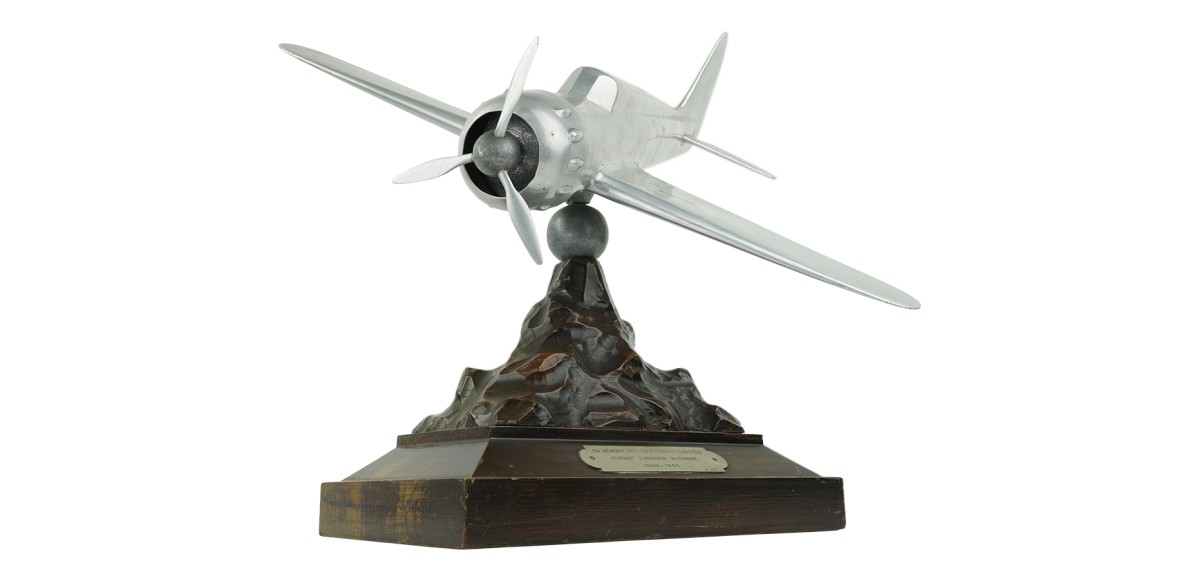
The Battle of France was a painful moment in history, particularly for the French Air Force. This is not the place to discuss the causes and circumstances that led to the selflessness and sacrifices of so many courageous pilots, navigators, bombardiers and mechanics, but rather to keep alive the memory of their conduct, as heroic as it was desperate. That is the purpose of the object offered here: to perpetuate that memory. It fulfils this role admirably, since, after all the decades that have passed, it still reminds us of that sad time.
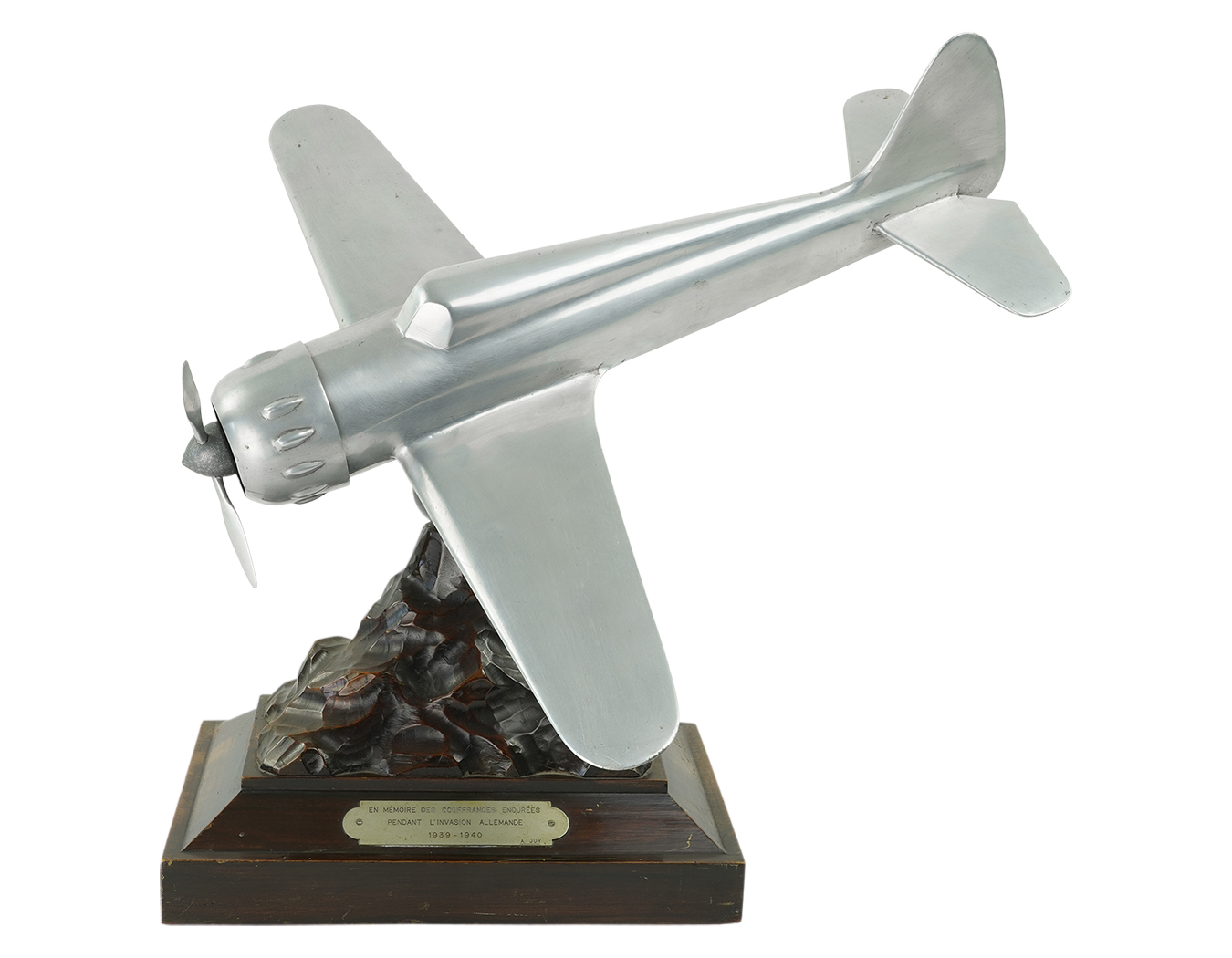
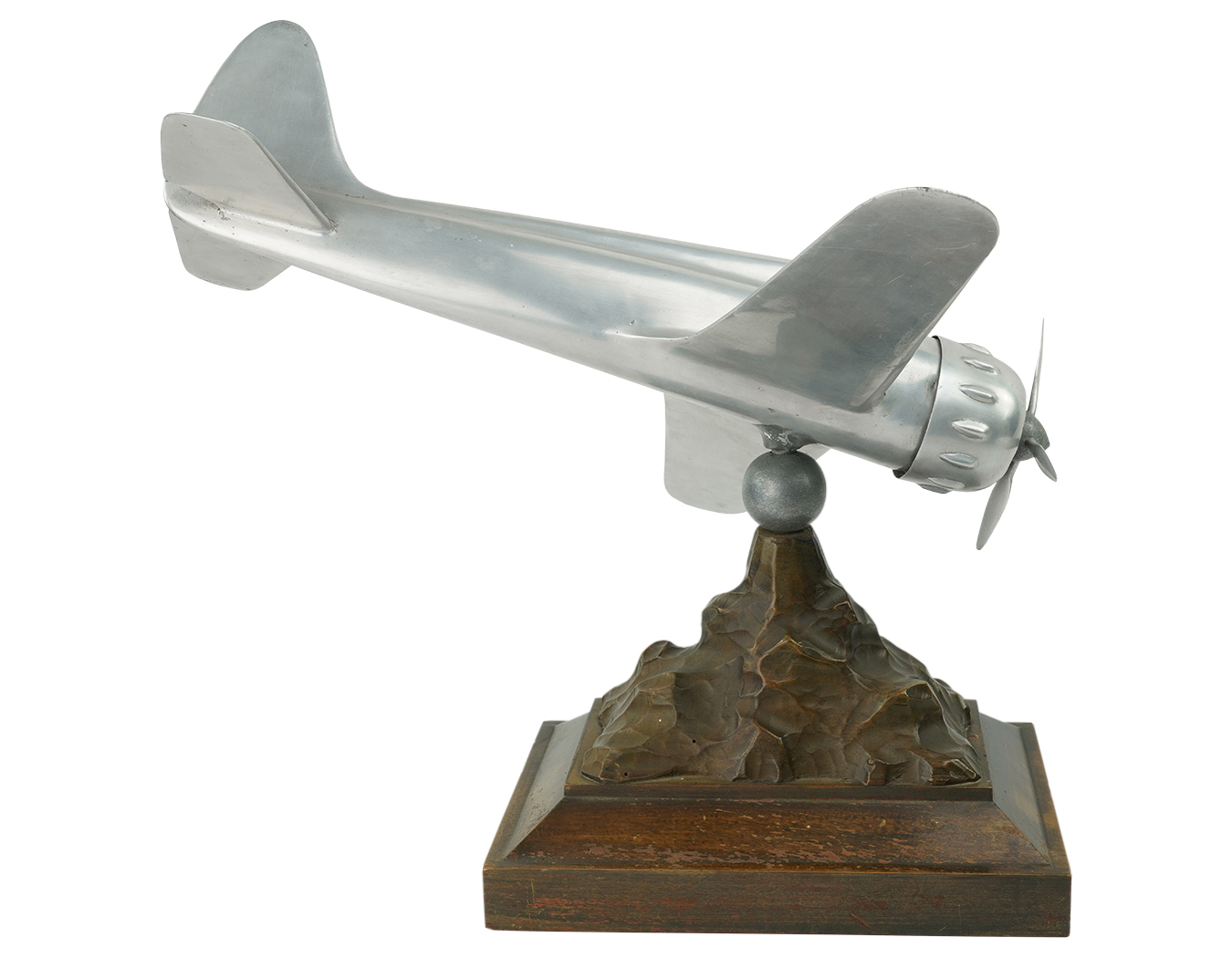
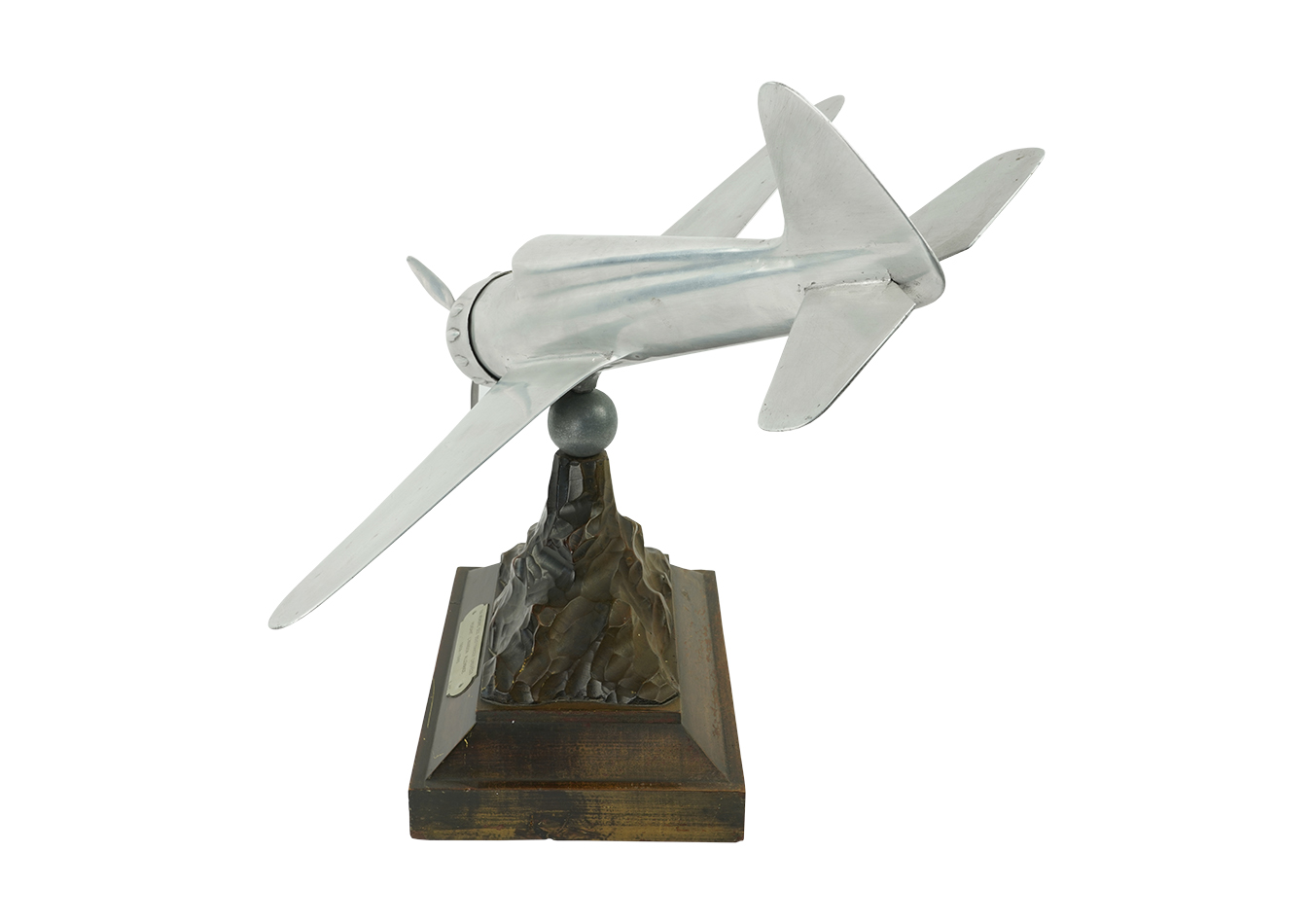
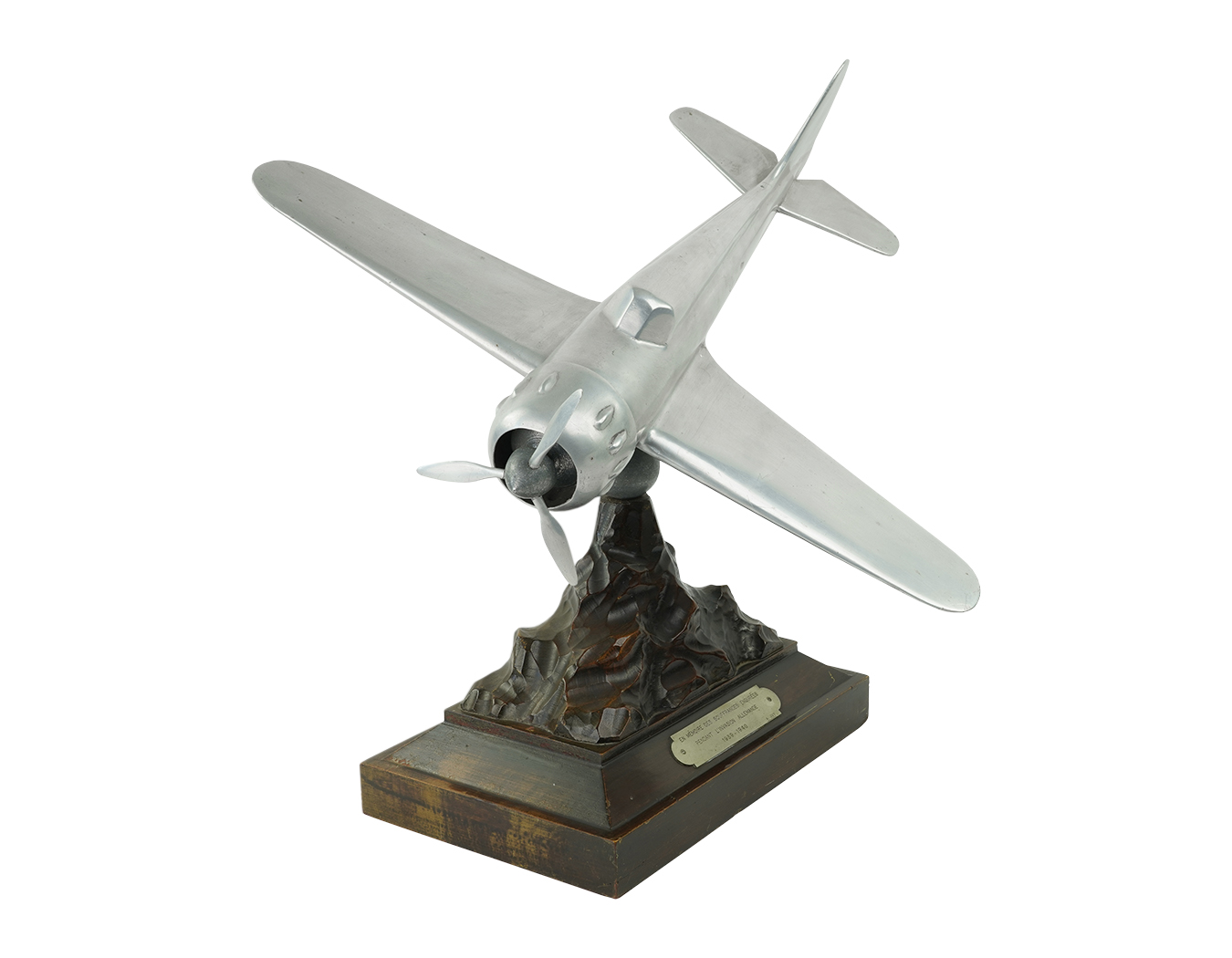
It is an aluminium model of a Bloch 150 series aircraft, displayed on a carved wooden base. It is a remarkable piece for at least four reasons. The first is the plaque on the base, which states that the object was made “In memory of the sufferings endured during the German invasion 1939-1940”. It therefore probably dates either from the war years or from the very first years after the war, at a time when the wound was still very raw. It is thus not a mere decorative antique but, as already said, above all an object of remembrance.
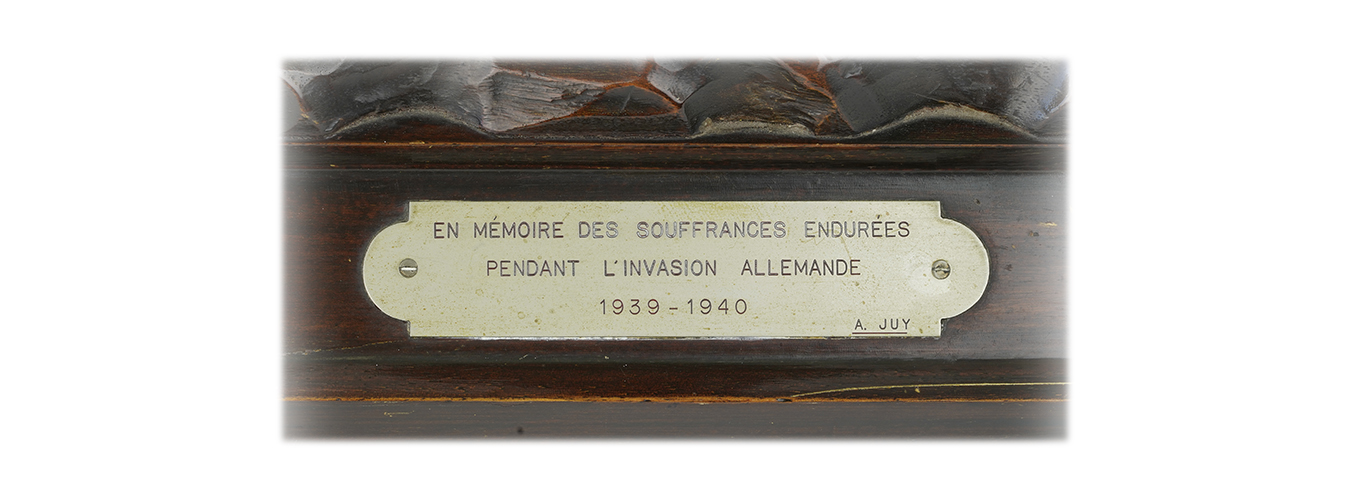
The second reason is that it depicts a Bloch 150 series. This is a machine that has very rarely, if ever, been modelled, even in folk art. The aircraft of that period most often represented in miniature are the Potez 63, the Bréguet 693 and the Morane-Saulnier MS 406.
The third reason is the scale of the model. It is not a display piece, nor one of those objects you set on the corner of a desk or on a shelf. Its size doesn’t allow it. The aircraft is represented at 1/20 scale, which gives the model a wingspan of 52 cm and a length of 45 cm. It is therefore better suited to being displayed on a sideboard or as a table centerpiece. Conveying the scale of such a piece in a photograph is not easy. To give the best possible idea of its size, it’s shown here alongside, and on the same plane as, a 33 cl can and a large 1 L bottle.
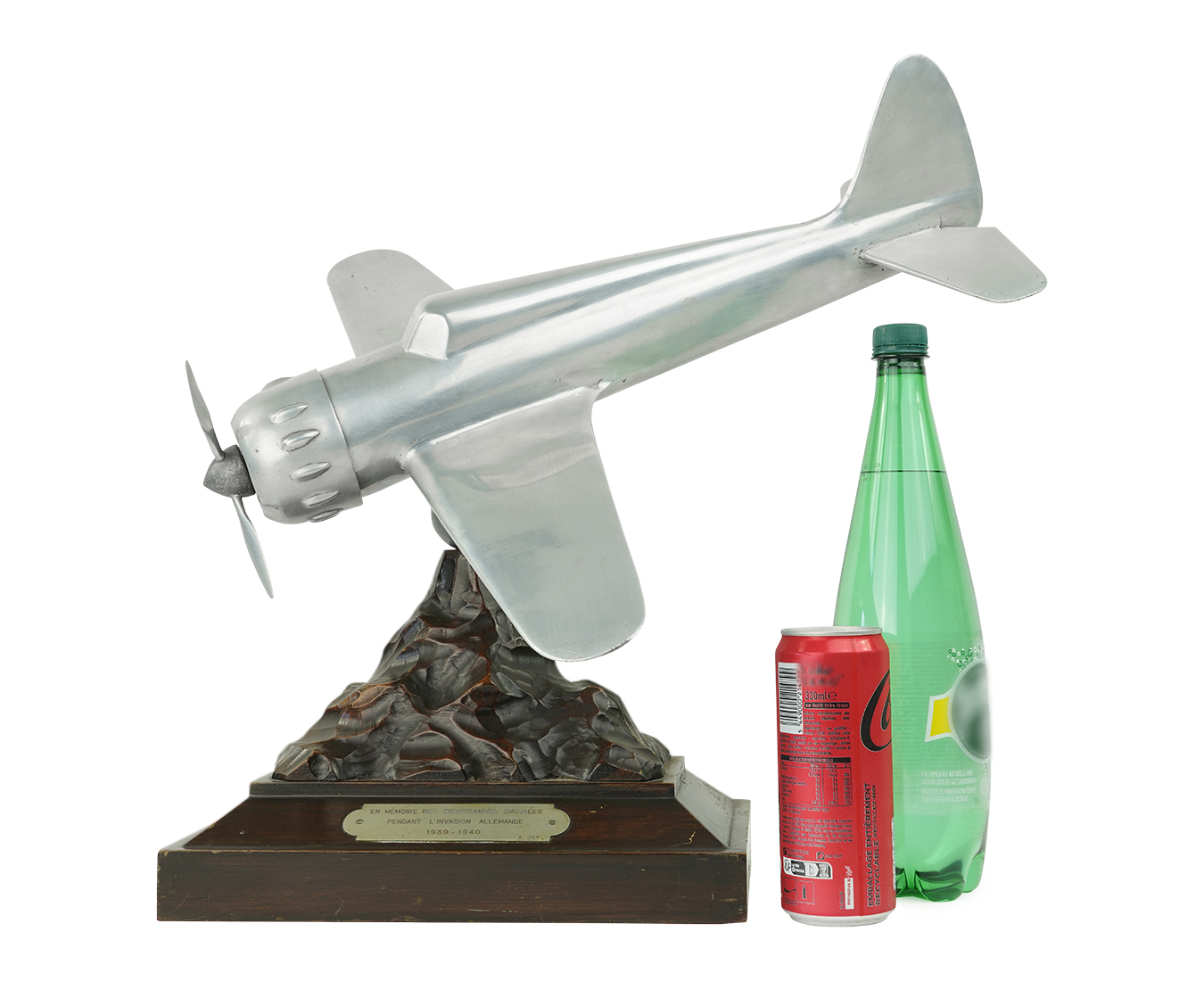
The fourth and final point that makes this object remarkable is its craftsmanship. It is worthy of its commemorative purpose. Contrary to what the photos might suggest, the model is not made of cast metal but of aluminium sheet, which makes it particularly light. The perfect shaping of each element, the precision of the assemblies and the invisibility of the welds show that it was made by a skilled craftsman, a sheet-metal worker who was certainly familiar with the aircraft.
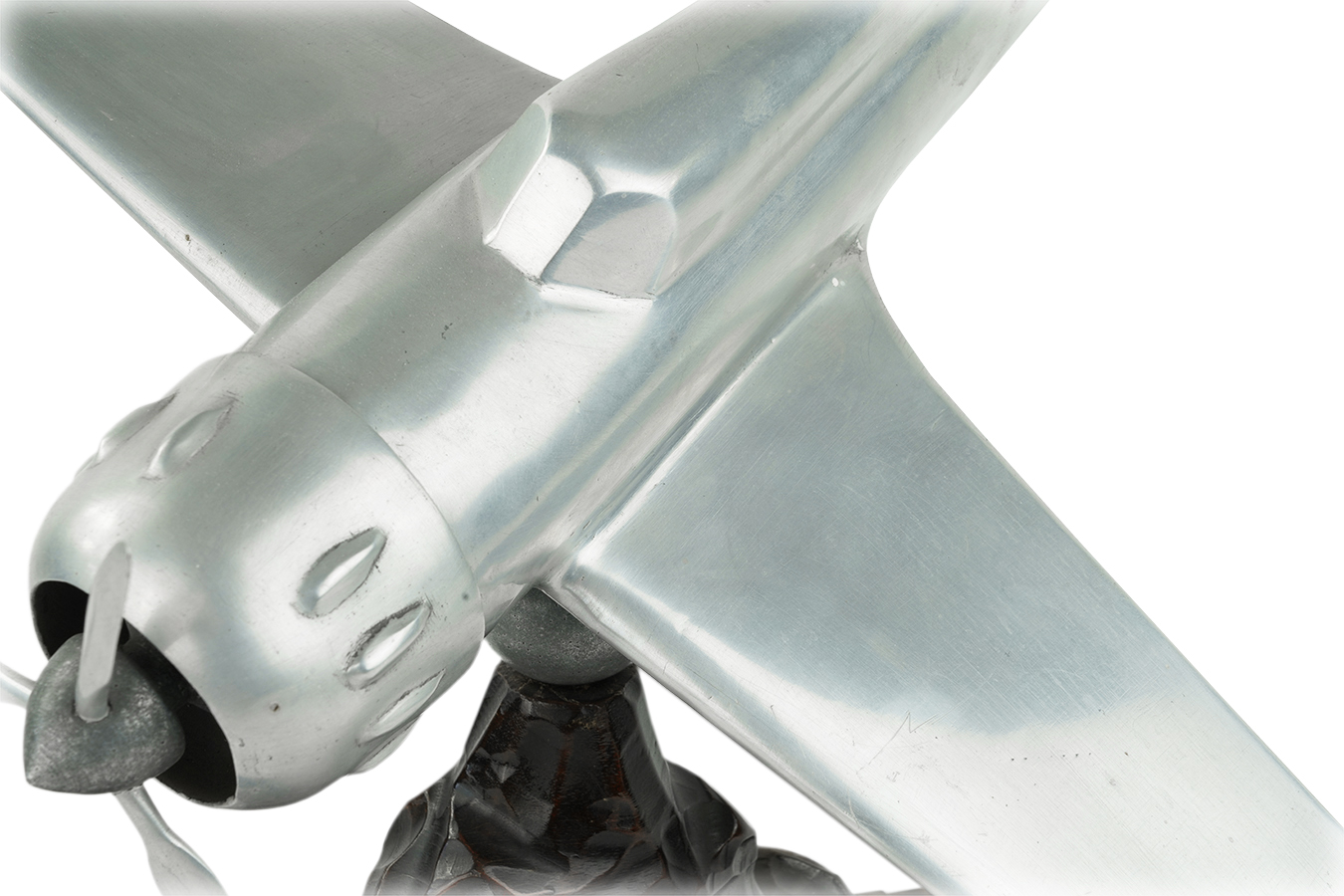
Together, these four elements make this object both unique and exceptional.
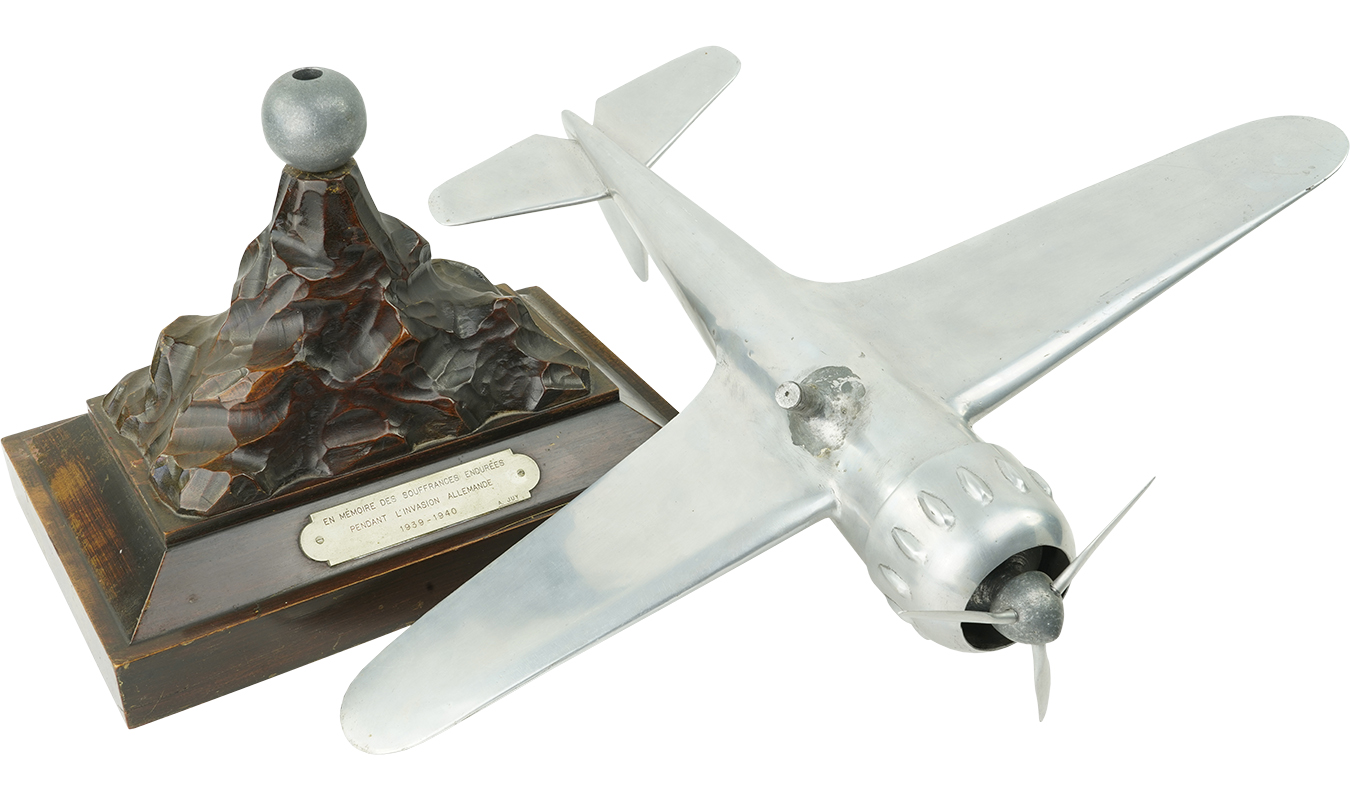
To complete the description, it should be noted that the aircraft cannot be tilted, but it swivels on the axis of its support. As for its appearance, it has been decided to leave the model with the patina that gives it a matt finish. It would of course be possible to restore its full shine: a simple surface cleaning of the aluminium with a few commercially available products would suffice.
All comments