
For the attention of: the pilot, the mechanics and the passengers
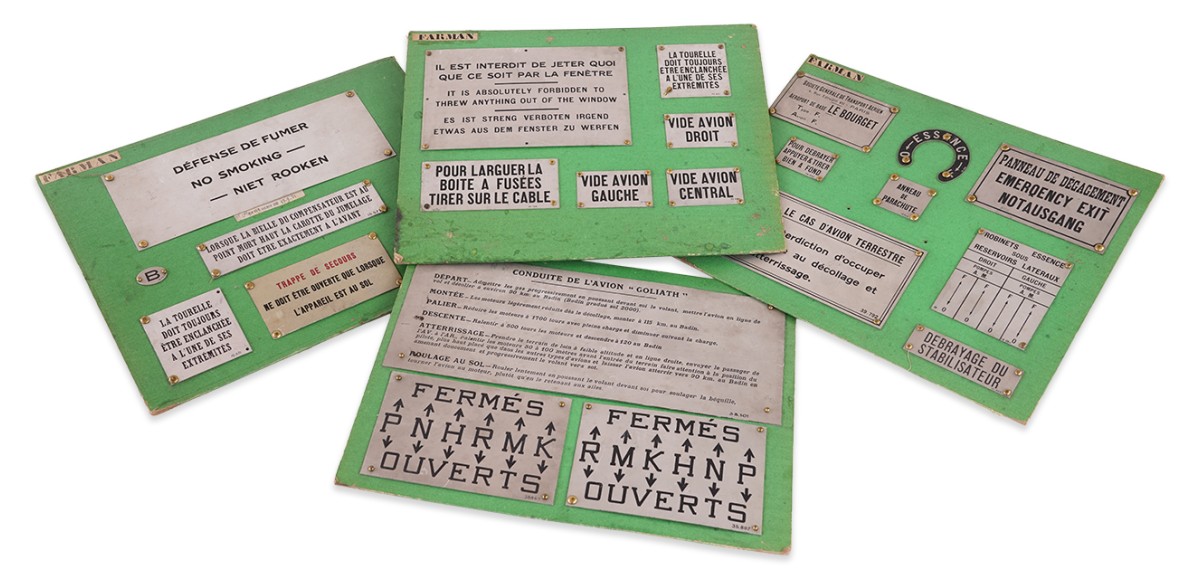
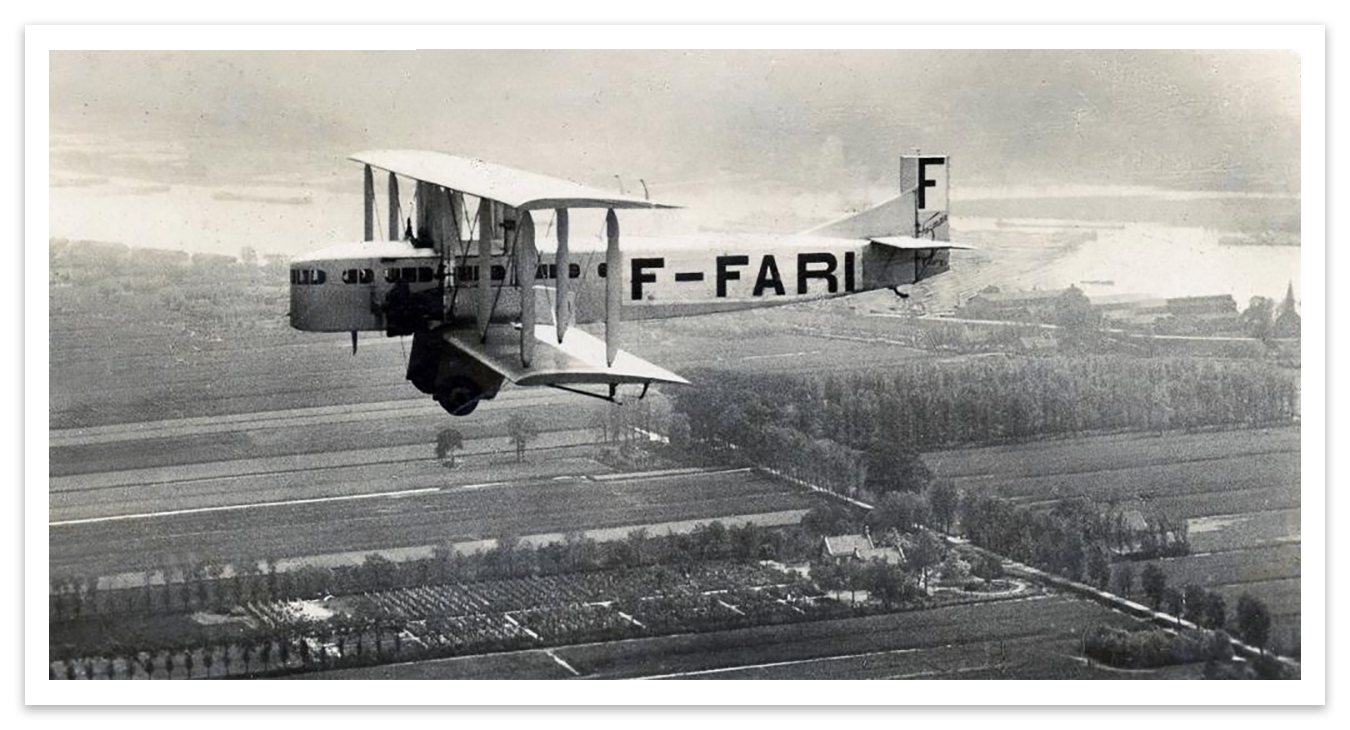
The construction materials used in the earliest aircraft greatly contributed to their demise, as wood and canvas were poorly suited to withstand the test of time. The famous Farman F-60 “Goliath,” which marked the true beginning of commercial aviation in Europe, fared little better than its contemporaries. All that remains of this aircraft is a single fuselage, which is on display at the Air and Space Museum in Le Bourget (France). Yet no fewer than 332 Farman F-60s and derivatives were produced in Billancourt for passenger transport, for the army, and for the navy between 1919 and 1931 *.
So naturally, under these circumstances, the items presented here are of particular interest. These are the placards that were affixed in and on the aircraft, intended for the pilot, passengers, and mechanics. If they have survived to this day, it is because these examples are those of the subcontractor who produced them. They were manufactured for the Goliath of the Société Générale de Transport Aérien (S.G.T.A.), also known as “Ligne Farman”.
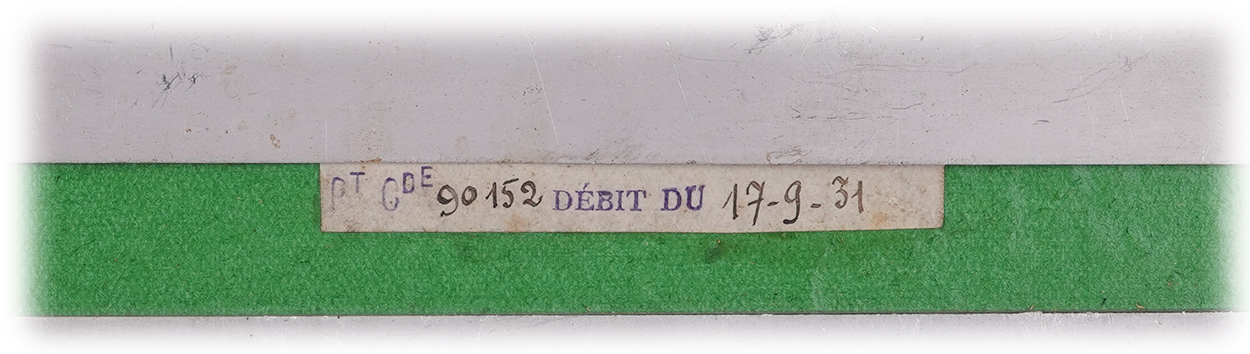
They are assembled and displayed on four panels, which has not only ensured their preservation but also allowed them to be presented as a complete set. These are likely a sort of “ready-to-print” proof or order summary prior to the production of the placards. This is suggested by the handwritten note on one of the sheets: “PT CDE 90152 debit 9/17/31,” which appears to mean in French “Payment for order 90152, debited on 9/17/31.”
These are four panels, each slightly larger than A4 size (28.5 cm x 22 cm), each featuring various placards of different sizes and shapes, with more or less explicit instructions, all in very good condition. These are technical instructions, and some of them provide valuable insights into aviation at that time. For example, there is this instruction for passengers: “It is forbidden to throw anything out the window” or, regarding the landing procedure, “Approach the runway from a distance at low altitude and in a straight line, move the passenger of the front to the rear”...
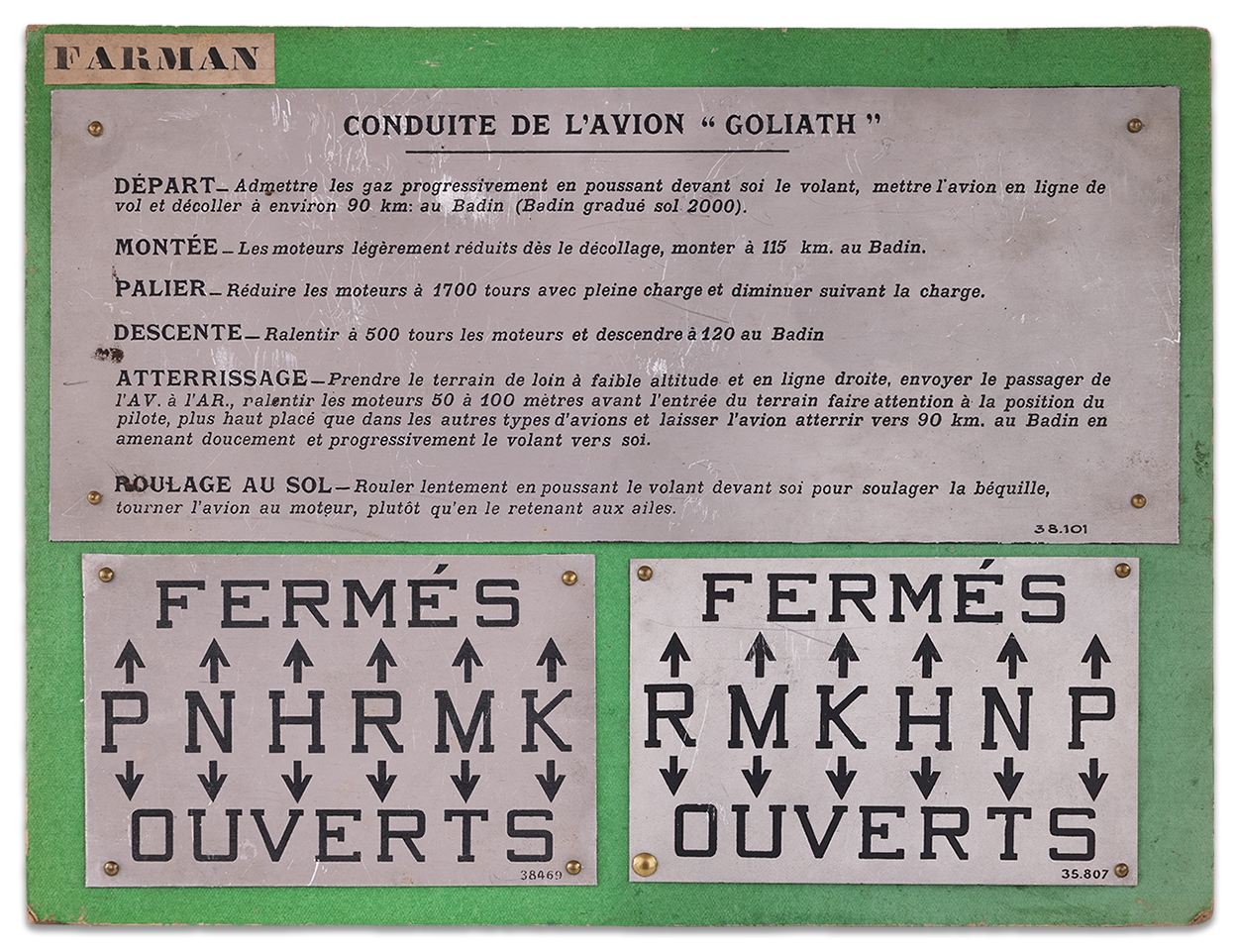
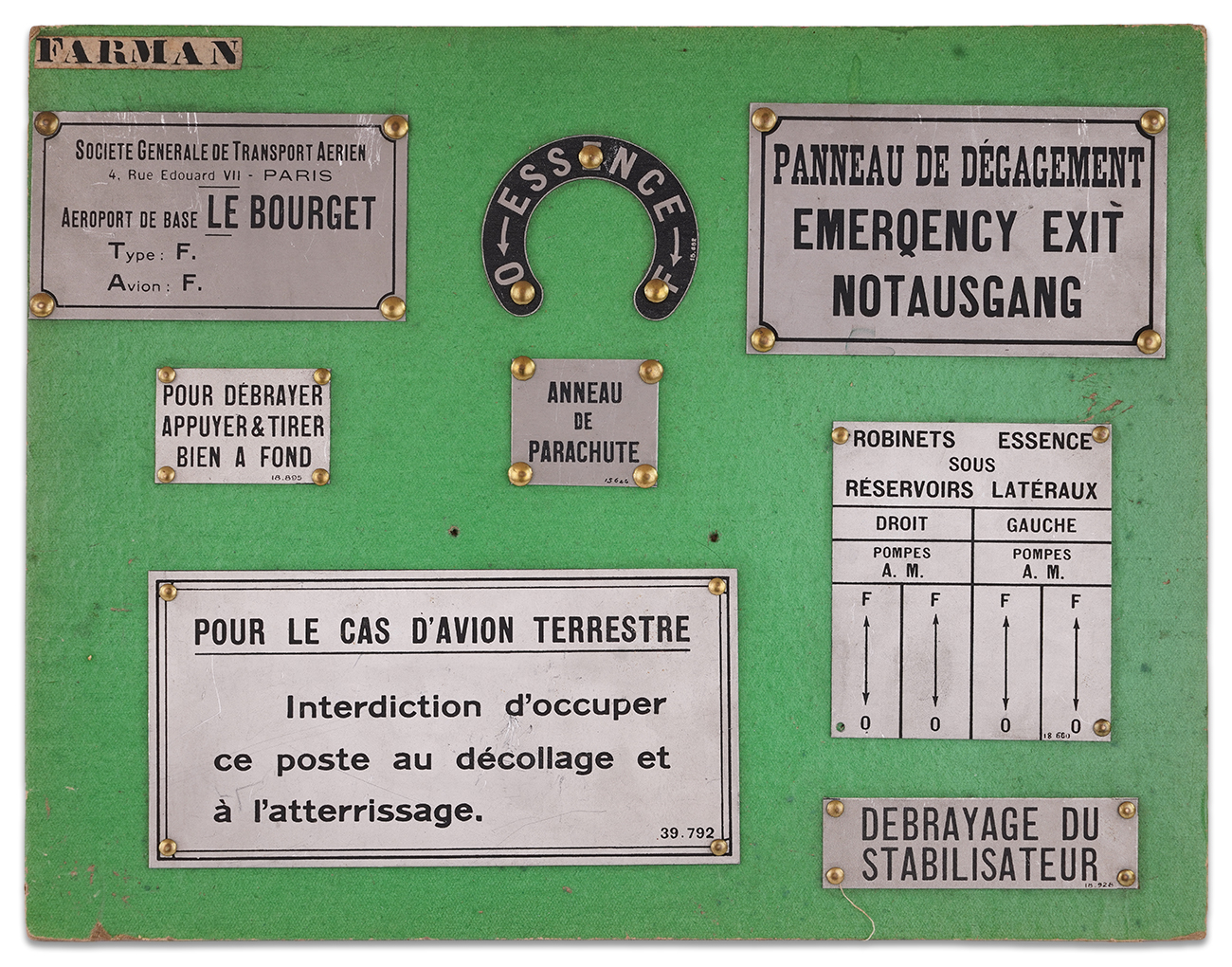
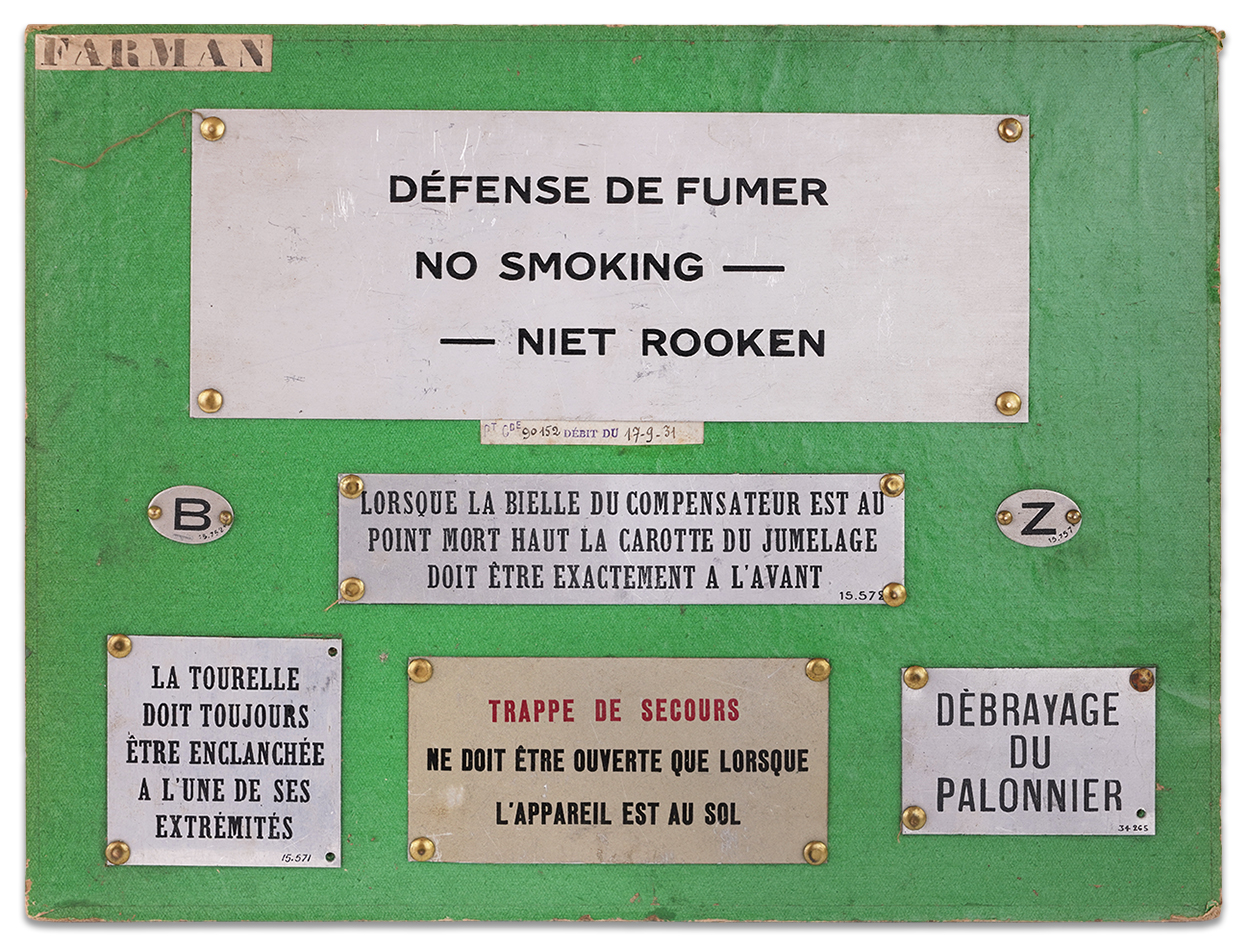
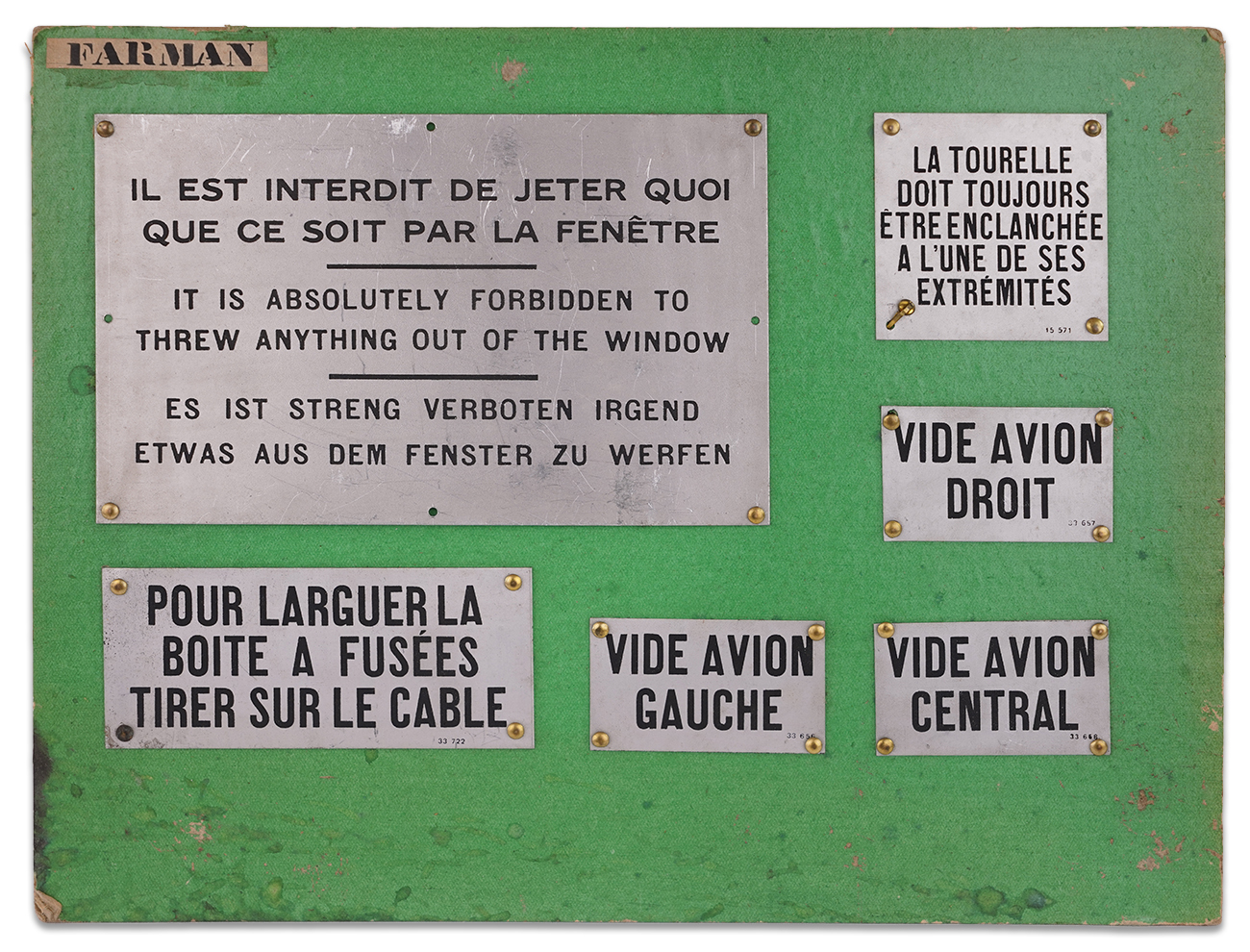
Considering the date of the handwritten note (1931), these placards clearly relate to the end of Goliath production. It’s a truly beautiful set, undoubtedly one-of-a-kind and doubly interesting since it covers both the Farman Goliath and the legendary pioneer Farman Air Lines!
* https://www.hydroretro.net/etudegh/le_farman_goliath.pdf
All comments